Eco-Friendly Materials That Work Best in North Shore Bathrooms
1677 views
It usually starts with a faint, musty smell that no amount of cleaning can remove. Then, you might notice the paint peeling in the corner of the ceiling or a floorboard that feels slightly spongy underfoot. For homeowners undertaking a bathroom renovation in North Shore style, this is a familiar and frustrating story. You spend months planning a beautiful North Shore Bathroom Remodel, only to have the unique local climate slowly undo your hard work within a few years.
The North Shore is stunning, but it is also wet. We live in a microclimate that combines high humidity with heavy coastal rainfall and dense tree coverage that prevents houses from drying out. This creates a challenging environment for North Shore home renovation services to navigate. A standard renovation that might last twenty years in Penrith or Parramatta can fail in Mosman or Turramurra in half that time if the wrong materials are chosen.
At Australian Renovation Professionals, we believe that sustainability and durability must go hand in hand. As a trusted North Shore renovation builder, we know that an eco-friendly bathroom that needs to be ripped out and replaced after five years is not actually eco-friendly at all. True sustainability comes from choosing materials that withstand our specific environment while minimizing environmental impact. After 25 years of acting as Renovation experts that North Shore, Sydney residents rely on, we have developed this comprehensive guide to the materials that actually work in our backyard.
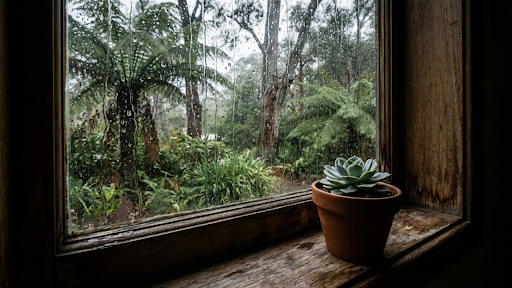
Before we look at materials, it is critical to understand the environment we are building for. Any successful bathroom renovation project must account for what builders call a high moisture burden.
Data from the Bureau of Meteorology paints a clear picture. During our summer months, average humidity in our suburbs spikes between 65% and 71%. Unlike the western suburbs, which dry out quickly, the North Shore receives significantly higher annual rainfall due to our coastal proximity and topography. We often see annual rainfall figures between 800mm and 1,200mm.
This constant moisture attacks bathrooms in three distinct ways. First, it prevents porous surfaces from drying naturally, encouraging surface mold. Second, it causes materials like cheap timber to absorb water directly from the air, leading to structural rot. Third, fluctuating humidity causes materials to expand and contract, which can crack grout lines and compromise waterproofing membranes, a disaster for any project for bathroom renovation in the North Shore.
Furthermore, many heritage homes requiring bathroom renovations in Cherrybrook or Neutral Bay are built on sandstone foundations without modern damp courses. This allows ground moisture to travel up through the walls in a process known as rising damp. Therefore, every material we recommend below has been vetted for its ability to survive these specific conditions.
Before we install a single eco-friendly tile, we must consider the environmental impact of the demolition phase. A typical bathroom renovation in North Shore generates nearly a ton of waste. In a standard project, this all goes straight to landfill.
We take a different approach to divert as much material as possible from the tip.
By managing the waste stream responsibly, your Bathroom makeover in North Shore starts on a green footing before the new floor is even laid.
The floor is the most vulnerable surface in any bathroom. It endures standing water, high humidity, and heavy foot traffic. In the past, eco-friendly flooring options often required a compromise on water resistance. That is no longer the case with Modern bathroom designs 2026.
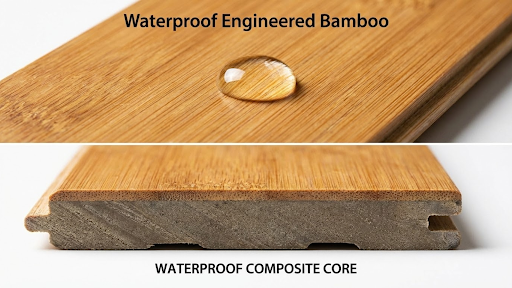
Bamboo is a sustainable superhero because it regenerates in just 4 to 7 years. However, traditional solid bamboo is disastrous in high-humidity bathrooms as it absorbs moisture like a sponge.
The solution for North Shore homes is Waterproof Engineered Bamboo, specifically, ranges using HydroPro technology.
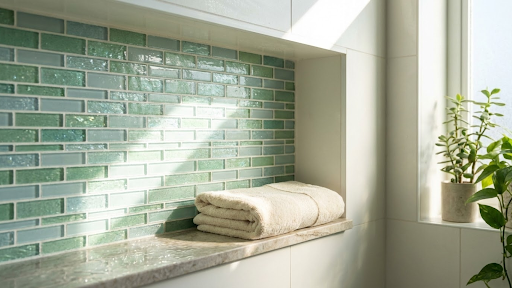
For a completely waterproof option that contributes to the circular economy, recycled glass tiles are our top recommendation.
Cork is a soft, warm, and renewable material harvested from the bark of the cork oak tree without harming the tree itself. It naturally contains Suberin, a waxy substance that repels water.
The vanity is often the first thing to show age in a damp bathroom. Cheap particle board absorbs moisture from the air, causing the laminate to peel. We avoid this by using superior substrates in all our Bathroom Renovations in Baulkham Hills and beyond.
We recommend vanities constructed from timber certified by the Forest Stewardship Council (FSC). This ensures the wood comes from responsibly managed forests.
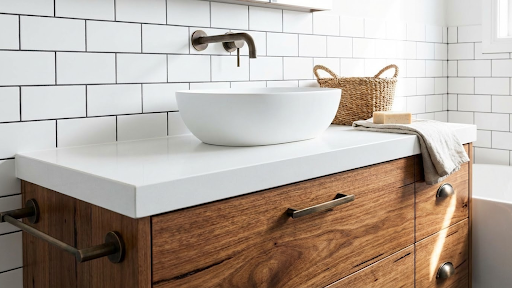
For a bespoke look that honors the history of the area, we love using reclaimed hardwood sourced from demolished bridges or wharves.
Instead of mined stone, which has a high carbon footprint, consider composite surfaces made from recycled glass chips suspended in a resin base. These surfaces are non-porous, stain-resistant, and do not require the annual sealing that natural marble or granite demands.
While tiling floor-to-ceiling is a popular look, the materials you choose for your walls have a huge impact on the room’s health and the longevity of your bathroom renovation.
Porcelain tile is inherently durable, but its production can be energy-intensive. We source tiles from manufacturers who use renewable energy in their kilns and incorporate recycled content into the clay body. Porcelain is denser than ceramic, making it the only viable choice for steam showers or wet rooms in our humid climate.
Glass mosaics are excellent for feature walls and shower niches. Because they are impervious to water, they are incredibly hygienic. A quick wipe-down removes soap scum, and they don’t require aggressive bleach-based cleaners to stay sparkling.
Indoor air quality is a major health consideration. In a sealed and tiled bathroom, chemical off-gassing can accumulate to dangerous levels. Standard paints release Volatile Organic Compounds (VOCs) for years after they dry.
We strictly use Low-VOC or Zero-VOC paints that meet Australian Paint Approval Scheme (APAS) standards.
Sustainability isn’t just about what you build. It is about how the room performs for the next 20 years. Following current Bathroom Renovation Trends, water conservation is paramount.
The Water Efficiency Labelling and Standards (WELS) scheme is mandatory in Australia, but the difference between ratings is massive.
For the truly committed eco-renovator, we can install a greywater diversion system. These systems capture water from your shower and basin, filter it, and pump it out to irrigate your garden. Given the large gardens typical of Wahroonga or Pymble, this is a fantastic way to keep your lawn green during water restrictions.
The bathtub represents a significant embodied energy cost in any Bathroom Remodel.
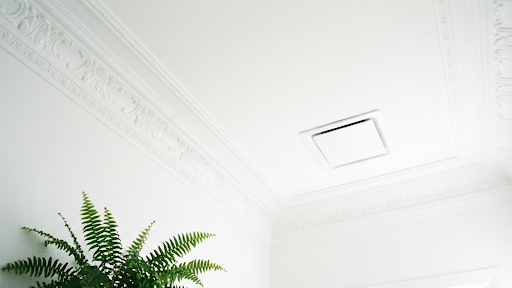
You can buy the most expensive eco-tiles in the world, but if your ventilation fails, your bathroom will become a toxic box of mold. Ensuring these systems are perfect is a critical part of a successful bathroom renovation in North Shore.
We use flexible class III waterproofing membranes that exceed Australian Standards (AS 3740). We apply this membrane across the entire bathroom floor and up the walls, creating a tanked room that prevents moisture from seeping into the timber frame.
Opening a window is not enough. We install high-capacity exhaust fans ducted directly to the outside. We calculate the fan size to ensure a complete air change occurs 15 to 20 times per hour, often wiring them to a timer so they run for 20 minutes after you leave the room.
We believe in transparency. Building an eco-friendly bathroom generally costs 25% to 50% more upfront than a standard builder-grade renovation. The bamboo costs more than the laminate. The low-VOC paint costs more than standard acrylic.
However, the Return on Investment (ROI) is compelling:
This is where Australian Renovation Professionals offers a distinct advantage for your bathroom renovation in North Shore. We operate on a Fixed Price Contract. We don’t give you a low estimate and then surprise you with the cost of the moisture barrier later. We calculate the exact cost of these premium eco-materials upfront. You get the peace of mind knowing that your sustainable renovation is financially sustainable for your family, too.
A bathroom renovation North Shore is a major investment. It makes sense to build it once, build it right, and build it for the future. Whether you are battling the damp in a heritage Mosman terrace or updating a family home in Castle Hill, we have the expertise to design a space that is healthy for your family and the planet.
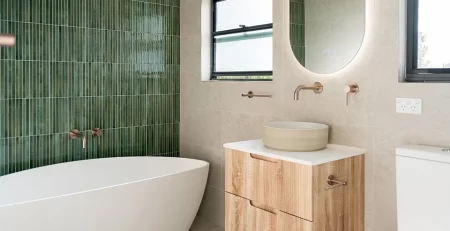
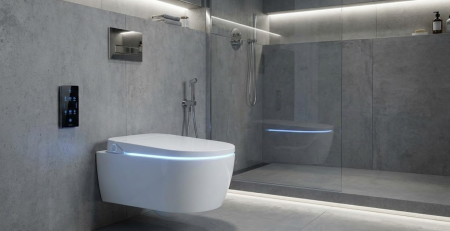
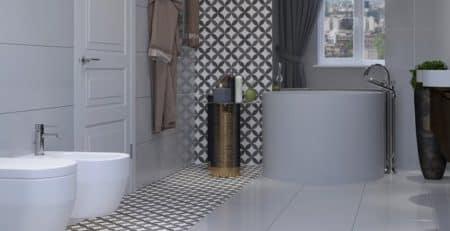
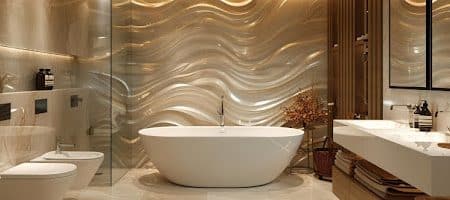
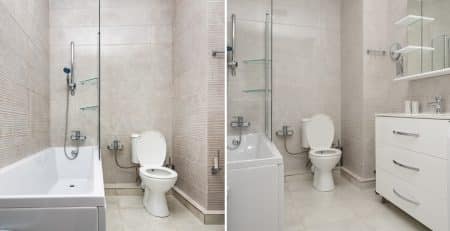
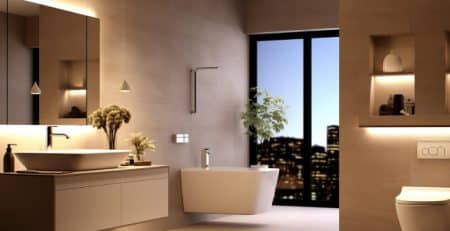
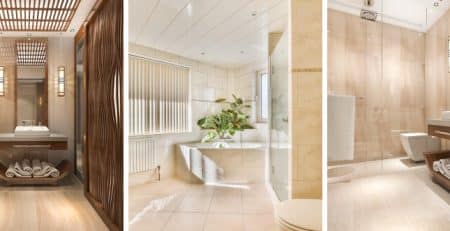
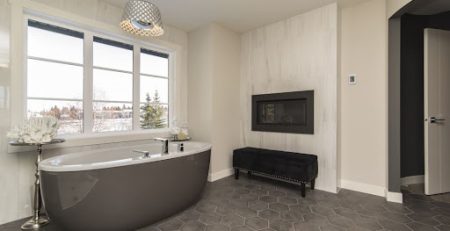
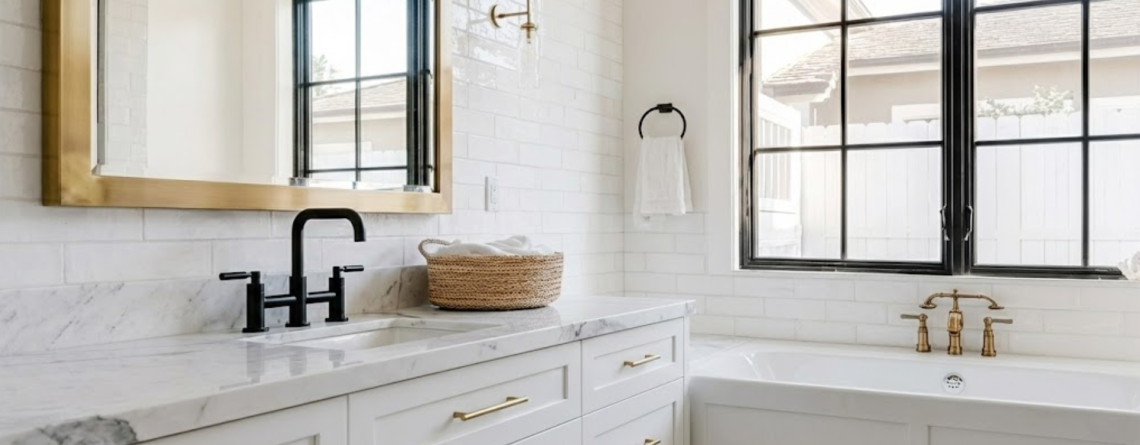
Explore our bathroom renovation gallery below to see real North Shore bathroom remodels, showcasing sustainable materials, contemporary layouts and expertly finished spaces completed by Australian Renovation Professionals.
Contact Australian Renovation Professionals today on 1300 550 047. Let’s discuss how we can bring sustainable luxury to your home.